“New Year, New Me”

I wrote the message I am about to share in January on social media, and I wanted to share it here with all of you as well. I think this is an important message for all.

Especially if you set some new year resolutions, and are already starting to feel yourself slipping back to old patterns. Maybe you already gave up on the resolution(s) entirely.

If so, this is for you!

“Instead of aspiring to be different this year, how about aspiring to be more authentic? More true to you?

Make this a year of self discovery. A year of growth. A year of letting go of old habits and patterns that are weighing you down, holding you back from what you are really capable of in this lifetime.

The fact that you have goals and desires that you are passionate about means that you are meant for more than your current experience, and you can have it. It’s not about implementing new habits and behaviours, at least not initially.

First, you’ve got to dig deep and uproot the foundation on which old dysfunctional and unproductive patterns and behaviours are built. Once those are brought to awareness, they can be adapted and replaced to move you closer in alignment with your true self.

The self that isn’t held back by fear, doubt, or insecurity. The self that is free to just BE. That sounds like something I want too 💖”

So if you set some intentions and goals for the new year and only made it a few weeks, know that it is not your fault.

You’re not lazy.

You’re not a failure.

It’s not that you have no willpower or that you are incapable of change.

The truth is that you have some limiting beliefs and unconscious patterns of behaviour that are holding you hostage. It’s not just about finding a strong enough “why” as others may tell you, at least not in the way it is often presented. Rather, it is about uncovering the true reason, the unconscious one, that keeps you returning to the same unproductive or unhealthy patterns you are trying so hard to kick.

If you can muster up the courage to look deep within yourself, you will find the real purpose for those behaviours. With that awareness comes power. Once you become aware, you can catch yourself in those moments with full understanding of what need you are really trying to meet in that moment. That, coupled with the traditional “why” for making a change, will help you to overcome the thing that has been holding you back once and for all.

With love,

Jessica

Food 4 Thought for Parents: What Really Matters?

This holiday season I have been reflecting a lot about my childhood, my experience with both parents, and the impact my experience has had on me as an adult. I wanted to put some of my thoughts together and share my experience to help parents heading into the holiday season. I may not be a parent, though I do think this perspective may help some make positive shifts while it is still possible.

We’ll start with a little bit of background. My parents were separated before I turned 1, and let’s just say… it did not end amicably. I grew up with holidays, birthdays, and all other special occasions being duplicated at each home. As a kid, I loved that because it meant more gifts, more turkey dinner, more fun, etc.

As I’ve been undergoing my own personal “re-construction” through therapy, shadow work, and other healing modalities this past year, I’ve come to some realizations about the differences in each home life. This difference is not limited to the holiday season, but that’s where we start.

On my maternal side, the tradition was to go to my grandparents’ house on Christmas eve and open gifts with my grandparents, my aunt and uncle, and my cousins. This was often awkward and tense, as the relationship between my mother and her parents had always been strained. Beyond the Christmas eve tradition, I have very little memory of the holidays at my mother’s. We opened gifts and I got ready to go with my dad.

On my paternal side, the tradition involved a lot of family activities. I remember leaving mix out for the reindeer and cookies out for Santa, spending quality time as a family, and being allowed to open one gift before bed in anticipation of Christmas morning. Christmas day involved opening gifts, breakfast as a family, playing with the gifts, and going to my other grandparents’ house for Christmas dinner with my aunt, uncle, and cousins on that side. It was always lighthearted and fun.

Do you see some of the main differences there?

Fast forward to adulthood, I came to the realization that I had been raised by an emotionally unavailable mother due to her own unresolved trauma. By someone who grew up with abuse and was never taught unconditional love. As a result, she thought showing love meant spending the most money… a false belief she instilled in me, which I’ve worked to eliminate.

When I would come home from my fathers’ and shared what I had received, it always seemed to be a competition. In fact, that was the first question I heard after being with my dad’s side of the family last Christmas. I got the traditional eye roll with a comment on how cheap my father was after sharing. For the first time in my life, with this new perspective and awareness I’ve cultivated, I commented back that the gift wasn’t what mattered.

As I reflect on all of this, it made me look at it from a bigger lens: my entire childhood.

I spent very little time with my father, only every second weekend and one evening a week. And yet, the time we did spend together was meaningful. He was present, he did things with us, he took us to the beach, the park, the playground. We went on family vacation every summer for a full week staying at a family cottage. We made memories.

When I reflect on my childhood time spent with my mother, I have a blank page in my mind. I don’t remember much of significance. When I ask about things we did together there are only two experiences she can name, both from a time when I was too young to remember. The reality is, I can’t remember experiences that I never had.

I was often told how infuriating it was for my mother when I put my father on a pedestal as a child because she was the one that had me full-time. I was reminded of how much she had to spend on me with my father getting off easy. She couldn’t understand why I valued him as much as I did because she was comparing her “investments” to his.

Just a week shy of 29, I understand it for the first time.

In case you missed it in my rambling: My mother focused on the financial investments of the holiday season (and parenting in general). My father focused more on the time investments.

As a child, the focus on the financial was never fulfilling. The gifts did not make up for the loneliness and isolation that I felt in having a mother that was emotionally cut off and didn’t have time or energy to spend being present with me. She placed all emphasis of the holidays and special occasions showering me with gifts, thinking that was love. What I really needed in that time was her presence and active involvement.

As a grown woman reflecting on her childhood, I can say with certainty that I cherish the memories made over the gifts. I don’t remember the gifts my mother got me as a child, no matter how expensive or flashy. And yet, I’ll always have the memories that I made with my dad and that side of the family.

Moral of the story!

Please do some reflecting of your own if you are a parent. Consider the approach you have been taking with your child(ren) thus far and if it may need some adjustment. Set priorities.

That is important at any time, though especially for the holidays. There is absolutely nothing wrong with spoiling your kids if you have the means to do so. However, don’t let that be your primary method of showing love.

Don’t let your kids grow up with no memory of their childhood holiday experience with you because it was centered solely around gifts. Create your own family traditions, even if its a single parent/single child family unit. Spend quality time together. Be present.

Make sure they FEEL loved through your actions and the memories you make together, and not just from your words or the gifts you give them. Words hold no meaning without reinforcing action, and the high of getting a gift goes away fast.

Memories are the true gift.

With love,

Jessica

Are you Waiting on Someone to Change?

Do you find yourself in a relationship, situationship, dating, or “talking” to someone that you care deeply about who is engaging in toxic behaviour?

Maybe they are distant and emotionally unavailable. Maybe they are manipulative and controlling. Maybe they are lazy and expect you to put in all the work. Maybe they are leaving you on read and ignoring you for days at a time.

Whatever the case may be, I invite you to think about your situation. Have you expressed what you needed to change? Have you told them how the behaviour was impacting you?

If you answered yes to those questions, ask yourself if they have made an effort to step up.

If they apologized and promised to do better, but nothing ever changed… that is manipulation. If rather than taking accountability for the issue that you raised, they got defensive and deflected blame onto you instead… that is projection. If they denied your perspective entirely, said you were being too sensitive, that you are crazy, that you were making it up, that the experience you described didn’t happen… that is gaslighting.

It’s all toxic AF.

Now I’m not saying that person is bad or toxic. I personally strongly dislike the overuse of the word “toxic” as it applies to people. No person is inherently toxic, it is their behaviour that makes someone toxic to others. Because we are all very different, what is toxic for one person may be just what another needs. That is why I don’t believe in labeling any person “toxic”, though they can still be toxic FOR YOU.

That said, if you find yourself in a situation with someone that fits into any of what I just described above… please stop waiting around hoping for them to change their behaviour. I truly believe that everyone is capable of change, but they have to want it and choose it for themselves. If they’ve shown you time and time again that they aren’t willing to change their behaviour when you’ve clearly defined what you need, believe that.

Do yourself a favor. Walk away.

If they truly valued you, their fear of losing you would be strong enough to push them to step up. If that isn’t happening, nothing you say or do is going to change that.

At a certain point we have to stop asking why they continue with the behaviour they know is hurting us and start asking ourselves why we are allowing it. We have to stop blaming ourselves and wondering what we could do differently to be enough for them to want to change. The truth is we’re already enough. It is due to their own internal struggle, not us.

You don’t need to lower your expectations because what you’re asking is a level of effort they are unwilling to invest to keep you. You’re not asking for too much, you are likely just asking the wrong person.

I know that hurts to accept. It fucking sucks. It doesn’t get any less painful the longer you wait around though, trust me. Choose yourself. Walk away so you have the opportunity to find the person that will care about you enough to put in the effort.

You’re worth it 💖

With love,

Jessica

Reframing Negative Self Talk

This image is probably going to trigger some people. I’m sharing it anyway because the point it presents is so important! People don’t give our minds enough credit.

Our mind has a ridiculous amount of power. Whatever you feed it determines the trajectory of your life. I still have moments where I have thoughts in the “don’t” column… often, and I recognize that they will probably never go away entirely.

What I’ve learned though is that I can shift them. When I notice a limiting thought, I actually say to myself something more in line with the “do” column. Framing is everything.

Maybe your current circumstances prevent you from having or doing something now, but you can frame it in a way that makes it seem possible in the future. Maybe you’ve “always” struggled with something in that past, but you can frame it in a way that makes it seem like it can change. Reframing thoughts allows you to look for opportunities and steps to get you closer to what you want, rather than remaining stuck somewhere you don’t want to be.

The examples in the photo are just that, examples. This could look very different from person to person. For me, it often centered around negative self-talk.

If I looked in the mirror and thought to myself “you look fat“, I would mentally correct myself. I would tell myself “you have worked so hard and made so much progress!” I would remind myself of all of the positive changes I’ve made with my health and reinforce that I am not fat and I am doing great.

Let’s say I made a mistake, forgot something, or did something a little thoughtless and thought to myself “you’re an idiot” or “you’re so stupid“. In this case I would mentally correct myself in saying “you may have done something a little dumb, but that doesn’t MAKE you dumb”. I would remind myself that everyone makes mistakes, and those mistakes are not what defines them as a person.

When thinking about my dating history, I could say “I always pick the wrong men“. A more empowering way to approach that would be “up until now, I’ve struggled with accepting less than I am worthy”. This acknowledges the past challenge while also recognizing that I am learning and growing, making it possible for me to change this pattern going forward.

These reframes take only a few seconds to perform, and they are super helpful. Instead of ruminating on the bad feeling or thoughts, reframing helps to shift you into a more positive and empowered state of mind. Call me crazy for talking to myself all you want, but it works!

Who’s up for a fun growth activity?

If you’re open to a challenge, try paying attention to the way you speak to and about yourself for a few days. Notice how you think about yourself, your performance at work, etc. Any time you notice a negative or pessimistic thought, think about how it could be reframed. Keep a journal somewhere of the negative thoughts and the empowered reframes you come up with.

If you have any that came up often or that feel really heavy for you, it may help to put that somewhere visible. You could print the reframes off and keep the sheet somewhere you will be able to see it and read it daily, or simply when it comes up and you need that reminder. You could put them on sticky notes and post them somewhere you see often. If you have a morning practice, you can incorporate reading the most critical reframes into that routine.

The more often you can remind yourself of the empowered reframes, the better. Essentially what you are doing is training your mind to think in a new way. To look for the positive and the possibilities. To keep you open for expansion and not held back by negativity. To step closer to the happy life that you want to create.

If you give this exercise a try, let me know how it goes! I would love it if you shared your most impactful reframes in the comments.

With love,

Jessica

Do You Identify as a People Pleaser?

Do you find yourself giving and giving to everyone around you? Getting frustrated when you feel a lack of reciprocation? Maybe you start to think that you’re just not meant to get as much love as you give. Sound remotely familiar? If so, this might help you understand why.

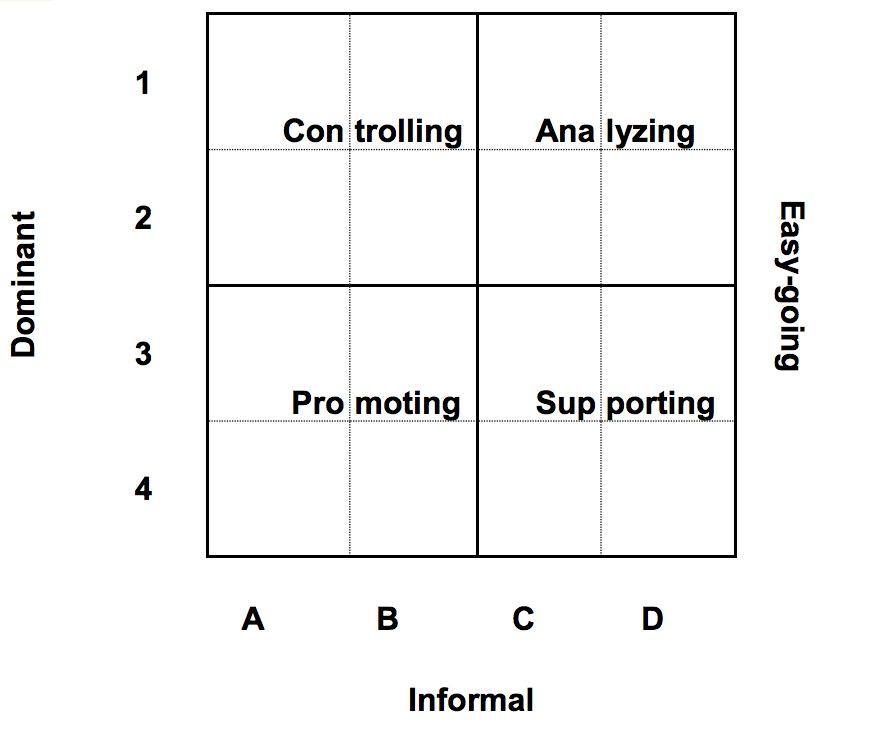
Learning about different ways to understand personality has been very eye opening for me. One of my recent explorations was with the four personality quadrants. I learned that people typically have a more dominant quadrant in each pair, with one primary quadrant in the lead. There is the supporter vs controller and the analyzer vs promoter. I found that my dominant quadrants indicated I was a supporting analyzer.

Today I am going to talk about the supporter. As a supporter, one of the biggest problems that you face is giving too much of yourself to others. You genuinely want to help other people and really enjoy making them happy. As a result, you may say yes to things you don’t really want to do or sacrifice your own needs to avoid disappointing someone else. You may do this with the expectation that when you need them, they will be there for you in the same way. Though that often results in disappointment for you if/when they aren’t.

You may try to be agreeable and bend to others’ needs and wants, so you may start to feel unappreciated over time when it feels like nobody is taking your needs into account in return. It may start to feel like you’re never getting reciprocation from the people around you and that you are always the one to make sacrifices. This can lead to burnout from taking on too much, and can even result in building resentment toward the people that you are helping.

Another primary challenge when it comes to being a supporter is having difficulty when it comes to confrontation, setting boundaries, and speaking up for yourself. Because you shy away from confrontation and don’t want to risk upsetting people, you tend not to speak up for what you want and need. This is problematic because others can’t possibly consider your needs if you are unable to express them. You’re so used to doing for others, you have a hard time setting boundaries to ensure you have the time that you need for yourself.

When it comes to romantic relationships, the biggest challenge for the supporter is keeping your identity and independence. It is really easy for the supporter to lose themselves in relationships trying to make the other person happy and comfortable. This is because supporters often try to treat others how they wish to be treated. Supporters also have a tendency to wind up in codependent relationships (likely with people that have a dominating controller quadrant) because they have such a difficult time putting themselves first and practicing selfcare. That is great for a controller type that likes to (you guessed it) be in control.

If this resonated with you, then it is likely you may also be a supporter.

Gaining insight around your personality type allows you to look at it holistically. You can see where your strengths and weaknesses lie, which enables you to work on strengthening the areas where you struggle. Knowing about these quadrants and where you fit helps you see how yourself and others relate to one another. This helps you better understand your relationships with those currently in your life, or those who had been in your life before so you can learn from those situations. Now that you have a sense of the personality style in general, let’s look at some real life examples.

Looking back at my life, I know that being a supporter has impacted my life in many different ways, including my friendships, relationships, and even my work. It helped me see that I’ve lost many friends because I felt unappreciated and grew resentful toward them from a conflict in our dominating personality type. I lost friends and relationships because I was unable to set boundaries for myself, ask for help, or communicate my needs properly.

I would invest a lot of time, energy, and sometimes even money into people that I cared about. One example is how I used to plan and throw birthday parties for friends complete with gifts, a cake, decorations, etc. I went over the top wanting them to have a great birthday and feel appreciated and loved. When my birthday rolled around, those same people wouldn’t take part in anything to celebrate with me. It makes you feel insignificant, and that hurts.

When there was consistently no effort put forward in return for my own, I pushed a lot of people away feeling hurt and resentful. It makes you feel like you’ve been used, or taken advantage of, by people that don’t seem to care about you at all. Sometimes that could be true. In other cases, it could simply be that they have a conflicting personality style and don’t realize how important their support is to you. That pesky limitation of the supporter not speaking up for needs and wants can be in part at fault for these types of mishaps.

Another example is the flaky promoter friends that are always looking for new and exciting things to do. You will make plans, but something else will come up later. The promoter gets excited and completely forgets about the original plans, and this makes the supporter feel like they don’t matter. You feel like an outsider and as though they only want to spend time with you when there is nothing better to do. I’ve had several friends like this, and recognize that I have distanced myself from them in the past for similar reasons.

In relationships, the impact of this style has been even stronger. At first you may try to do everything to make life easy for the other person. To do things that will make them feel loved and supported. They may get accustomed to this and come to expect it as the norm, never really reciprocating the way you expected. When you start to get frustrated and resentful that they never take initiative to try to help you or make you feel loved and supported in the same way, those negative emotions can build. Eventually it will reach a boiling point that often takes them by surprise because they don’t understand where the “sudden” upset is coming from.

When this happened in my last relationship, I totally shut down. We moved in together and I unpacked and decorated the majority of our apartment by myself, tried to stay on top of the cleaning, and had supper started or ready most nights before he came home. He worked a physically demanding job and I was working from home, so the supporter/caretaker in me tried to make things easier on him. Then I started school part-time on top of working a full-time job. At that point I was juggling so much that I was unable to keep the balls in the air.

Self-care was the first to go, and I started missing my workouts quite a bit being too tired and overworked. The house was messier and we ate out more often because I didn’t have the time or energy to clean or cook. I started gaining weight, feeling down on myself, and felt consistently exhausted and burnt out. At that point I expected him to pull a bit more weight without needing to be asked, recognizing that I was drained and stepping up. When that didn’t happen, everything I had described above took hold and the resentment grew.

Of course there were other factors involved in that relationship ending, but this pattern was a big realization as I reviewed the personality quadrants. With this new understanding, I’ll be better able to recognize and prevent the pattern from repeating in future. The awareness of this aspect of myself will enable me to actively practice being more vocal about my needs and setting healthy boundaries in interpersonal relationships.

These are just a few examples of the ways in which this particular personality quadrant can impact your personal relationships. You may even find that my stories resonate with you and some of the situations you’ve found yourself in with others. If not from the perspective of a supporter, maybe from a different perspective of interacting with a supporter. If so, I encourage you to dig into the personality quadrants and learn about each one!

No quadrant is necessarily bad, though they all come with strengths and weaknesses. Once you figure out your own dominating quadrant(s), you’ll be better able to spot your weaker points and work to improve them. From there, understanding the other quadrants will help you better understand those around you so you can build better relationships.

Learning about your personality enables you to learn about yourself on a deeper level. That awareness is everything when it comes to creating positive change in your life. That is so worth the effort! YOU are worth the effort.

With love,

Jessica

Claim Your Power Live – Initial Thoughts

This weekend I took some time for myself and attended a powerful virtual event. Day 1 of the Claim Your Power Live conference with Mastin Kipp was intense to say the least.

Taking a polyvagal approach, one exercise involved shifting in and out of joy, sadness/depression, and anxiety/stress. People are often scared to allow themselves to feel the “bad” emotions because they think it will consume them or they will be stuck in the emotion. The purpose of that exercise is to teach our nervous system that it is safe to feel into those harsh emotions by showing we don’t have to stay there.

This process helps to release the emotions that we have trapped inside and create a more flexible nervous system.

Is it easy? Not exactly.

Does it hurt? Yup, but in a good way.

It allowed us to fully sink into those feelings temporarily, allowing us to free up space for ourselves on the other side of it. I can tell you that nobody died from fully feeling their feelings, but there were sooo many tears! Sometimes that is exactly what we need – to let it out.

Side note: I would like to take a moment to express my gratitude for waterproof mascara 🙏🏻

I finally see the science behind why some of the most impactful things that I’ve experienced this year have been so effective. From the Dickens process at Unleash the Power Within with Tony Robbins, Neuroencoding methods with Joseph McClendon the 3rd, even emotional vipasana from Teal Swan’s The Completion Process. They can all be tied back to polyvagal theory and somatic therapies.

The science is catching up, and this is gaining traction. I can’t wait for this to get out there more! This will be game changing for mental health treatment.

In the meantime, if you are struggling I highly encourage looking up Mastin and his work. So many of us struggle trying modality after modality, with nothing ever fully working to free us from the pain. I encourage you to look into these concepts because it just might be the missing piece!

With love,

Jessica

World Mental Health Day

October 10th was World Mental Health day. Last night I saw an old post in my social media memories that I had made on October 10th several years ago. It was filled the usual positive motivational fluff:

“Reach out to someone struggling.” “Leave people feeling better when they exit your presence.” “Be there for each other.” “Be kind.”

Don’t get me wrong – all of that stuff is still important, but this year I have a different challenge. How about we make time to learn about emotional health? How about we learn where that stuff comes from so we can improve our own mental and emotional health, show up better in our relationships, and so we can better understand and empathize with those we care about?

A lot of the self-help and mental health modalities out there today are actually counterproductive and dismissive. Some have you believing it will all be ok if you can “fake it til you make it” and just smile more until you’re suddenly happier. That doesn’t work because the avoidance will fester until it reaches a boiling point, and whatever is shoved down will come out eventually.

Others may work a bit, but only get us so far. This is because they miss a critical component, the one that is actually responsible for how we respond and react in situations. That is our nervous system, which regulates the body. When our body is dysregulated, our mind will be too. In order to get out of the funk, we have to bring our physiology to the mix.

I have been doing this work for some time now, and it has been incredibly helpful. Most recently, with the emotional health challenge with Mastin Kipp where it explains all of this in depth. It also allows you to see some breakthroughs happen live that are very much relatable. I hope more people jump on for the replays, because this is powerful and transformative stuff.

Know that you are worthy of having breakthroughs that will enable you to create a happier, healthier life for yourself 💖

With love,

Jessica

What does it mean to “love yourself”?

Prior to this year, the “self-love” buzzword used to really get under my skin. All the “just love yourself” statements always made it sound so easy. Just like how people commonly say “just let it go”, as though you can flip a switch on something painful and suddenly it will no longer hurt.

For someone that is struggling, hearing those kinds of statements from others can royally tick you off… including from your therapist, as it turns out!

We’re not born with shame, self-hatred, or insecurities. That begins to emerge through our childhood by observing those closest to us. It is then reinforced and amplified by socialization and what we see in the media.

I’ll give you an example from my own life:

I grew up primarily in the care of my mother, who was hyper-fixated on appearance as a measure of self-worth. She had been bullied as a kid for being overweight, so she was always trying to lose that last bit of weight. She associated being overweight with pain, and being fit or thin with more positive things like approval and praise. This led to an adult that spent hours at the gym, ran 10k a day, and battled with an eating disorder to try to look a certain way.

When she was thin she would feel great. She would dress in skimpy outfits and go out on the town feeling incredibly confident. When she didn’t feel so great or struggled with her weight, it was a very different story. As I grew up witnessing this, I started unknowingly adopting those same beliefs about self-worth being tied to your appearance.

As I emerged into my pre-teen and beyond years, this became increasingly problematic. I distinctly remember times when I had gained a little bit of weight and was feeling down on myself. Rather than being told that I was perfect as I was and that my worth was not tied to how I looked, I was told “you just need to lose 10lbs and you’ll be perfect!”. I was encouraged to go to the gym and go on a diet.

I know that she meant well. She didn’t want to see me get bullied as she had been in her younger years. That said, it doesn’t change the fact that it had a detrimental effect on my own self-worth. This parenting approach was coming from her own unconscious beliefs, and though she was trying to shield me from potential pain, it caused pain in a whole different way.

This is just one example of many of course. There are plenty of ways in which we can be exposed to, and unconsciously adopt, these types of self-hating behaviours and beliefs.

Maybe you grew up with a perfectionist as a parent, needing everything to look and be perfect.. or else. This can lead children to becoming hyper-focused on perfectionism themselves. Holding yourself to incredibly high standards, punishing yourself for failing to meet them, and struggling to truly appreciate and celebrate when you do meet them because you always feel as though you could have done better.

Another example would be parents that use a lot of self-deprecating humor or demonstrate a lot of negative self-talk. Hearing those you love talk down about themselves, call themselves dumb, or make jokes about being lacking in various ways can have a similar effect on children raised in that type of environment. They may start to adopt those same tendencies, which will follow them into their adult lives and relationships.

So many of us grow up like this learning these limiting mindsets and beliefs from parents that lack self-love themselves. The really unfortunate thing is that these beliefs can hold us back long into adulthood until we bring them to conscious awareness.

This year I learned that loving yourself is not something that you just wake up one day and decide to do. It is something that you consistently decide to practice through little steps each day. Most importantly, it is something that can be learned.

It’s correcting the negative thoughts and eliminating self deprecating humour.

It’s using affirmations and working on yourself.

It’s taking yourself on dates and doing things you love that make you feel good, in whatever way that presents for you.

It’s setting and holding boundaries to protect yourself from emotional harm from others around you.

It’s honouring and allowing yourself to feel however it is that you feel… without trying to distract yourself, shove it down, or force yourself to feel a different way. 

It’s allowing yourself to have a break without being hard on yourself for wasting time or not being productive.

It’s allowing yourself to celebrate small successes and having compassion for yourself when you have setbacks.

It’s coming to terms with some of the shadow parts of yourself so that you can accept yourself more fully.

It’s doing whatever you need to do to bring joy and happiness to your life and get back to your true self, free of everything you picked up from others along the way that no longer serves you.

You won’t be perfect at it all the time, but the great thing about practice is that the more you do it, the easier it gets. If you keep building these things into your daily routine, you start to see your perspective change. It may be slow movement, but I promise that you are are worth the effort! So much more in this life is waiting for you on the other side of this journey.

With love,

Jessica

Are You Sabotaging Your Relationships?

I stumbled upon a video this morning by Teal Swan that really resonated with me. She was talking about how we often make it impossible for ourselves to have healthy relationships. The reason this resonated so strongly with me is because it aligns with one of the bigger breakthroughs I’ve had this year.

The example she used in the video was a wife that complains about their husband never putting any effort or energy into them, or failing to spend quality time with them or the kids. This example is probably one that a lot of people can relate to, even without the marriage component. It can apply regardless of gender role too.

In the example used, the problem comes when she describes an interaction between the husband and the wife. He calls to tell her he is going away somewhere and will be unavailable, and she acts as though it is fine. Then she gets off the phone and rolls her eyes, as though this confirms what she was already thinking and feeling. Rather than talk about it with her husband, she complains to a third party.

This is problematic for a number of reasons, the biggest being that it doesn’t allow our partner to be aware of our needs or expectations for the relationship not being met. We can’t expect the people that we care about to know what we are really thinking and feeling if we don’t communicate. We need and expect them to communicate with us when something we do bothers them, so we have to recognize that they need the same from us.

We often have this story in our mind that if people really cared about us, they would know what we need and want to provide it. That they would know when we’re hiding that we’re upset and give us emotional support. We expect them to pick up on hints and clues.

In some cases, maybe they do know what we need and pick up on the hints and don’t care. That said, in most cases it is far more likely that they view the world and relationships differently than you do and simply are unaware that what they are doing (or not doing) bothers you. Maybe they even started to think that YOU don’t care about them because you’re acting like you’re fine when you’re not.

I think we often hide the things that bother us in dating and relationships because we’re scared of being rejected, abandoned, or causing conflict. This could be due to unhealed wounds from our past that are playing a role in our present relationships. What we don’t realize in the moment is that in trying to avoid rejection, abandonment, and conflict by hiding what we feel and need, we actually end up rejecting and abandoning ourselves in the process. Rather than causing conflict in the relationship directly, we cause conflict within ourselves instead.

Hiding our true feelings allows for resentment to build up toward the other person, and even toward ourselves unconsciously for not being authentic. We grow increasingly frustrated each time our partner says or does something that reinforces our belief that they don’t care about us or our needs. Eventually that is going to reach a breaking point, and likely end up resulting in major conflict down the road anyway. 

That resentment and false narrative that we create about the situation in our mind can also lead to us using manipulative tactics to try to get what we want. For example, maybe you try to make the person jealous to get them to commit more fully. If they don’t answer your text for hours or days, maybe you try to “punish” them or “train” them by doing the same. I can tell you from past experience that using these tactics never works out well. These are all control games, and they only create more distance. You can never control another person, and what you think is going to happen is often not the outcome you end up with. All you can do is control yourself.

It all comes back to communication. In order to have a healthy relationship, we need to become self-aware to a point where we understand our needs and can communicate them with our partner. We need to give them an opportunity to recognize that we have needs not being met, and decide if they are willing or able to meet them. This is the part that is scary for a lot of us because it means needing to be okay with the possibility that they may walk away. That was something that I struggled with for a long time, and I am still working at it.

All of this applies strongly to the dating world as well. People often worry about scaring off those that they are interested in by being too vulnerable too fast. Honestly at this point in my life, I would rather be open and honest about my needs early and scare people away than hide how I feel and be unhappy. Our needs don’t go away, so the result to hiding those things is having it present much later after an attachment has already been formed. It hurts a lot more to lose someone once you’ve been emotionally invested with them for a long period of time, so you’re better off putting your cards out on the table!

Moral of the story: be authentic with dating prospects and partners. Open up, communicate, and allow the opportunity for mutual growth to unfold. After all, I think that is what relationships are really about. Having that one person that drives you, inspires you, and supports you in doing and being better each and every day.

Know that you are worthy of that type of love.

With love,

Jessica

Are You Really Too Needy?

If you were drawn to this post, I would be willing to bet that someone you care about has told you that you are too needy, too sensitive, or something along those lines. Or you may have been trying to find the kind of love and support in relationships that you need and struggling to find it. This may have caused you to start wondering if you are being too needy and if you should lower your standards or expectations.

I’ve been digging into attachment theory lately, and I stumbled upon a quote last night that really resonated with me. So much so that I still had it popping up in my head this morning, and I felt compelled to share. First I want to give you some context from the book, Attached.

Chapter 2, where I found the quote I want to share, resonated with me so much. For a long time I had started to believe that I was too emotional and too needy. I thought that I needed to work on myself to gain better control over my emotional needs and learn how to self-soothe rather than expect to receive emotional support from a partner. There is a relationship between two people described in this chapter that aligns with this same mindset.

Attachment theory teaches us that when we become attached to a person that we care deeply about, our brain becomes wired to try to establish connection with that person. They become our “secure base” and the person that we turn to in times of need as an emotional anchor. This is especially true in times of stress. If we are anxious or needing emotional support, we will seek that out from our partner. If they don’t give us the reassurance or support that we need, that programming will cause us to continue trying to establish that connection and closeness.

Current culture is riddled with the same mindset that I described from my own experience and the example from the book. You see it all the time in the self-help industry where people claim you need to love yourself and learn to be completely independent. To not need anyone before you go out and find a partner. So you go down the self-help rabbit hole trying to “fix” yourself because you see your needs and emotionality as a problem to be solved.

I do think it is important to love yourself, have your own life, continue to grow, and be content on your own. That said, it is natural for us to still want and need support from a partner. In the book they refer to this as the “dependency paradox”. This essentially means that though we are meant to have happy lives independent of one another in our relationships, we will actually become happier and even more independent when we have a supportive partner that we can count on by our side.

So are you really too needy? Too sensitive? Too emotional?

Probably not. Instead, you likely have needs that are not currently being met by – or are in conflict with – your partner. This is where attachment theory can help, along with other methods of self reflection and inner work. The key is better understanding yourself, your behaviour, what drives your emotions, and how you relate to others.

Attachment principles teach us that most people are only as needy as their unmet needs.

Attached. by Amir Levine and Rachel Heller

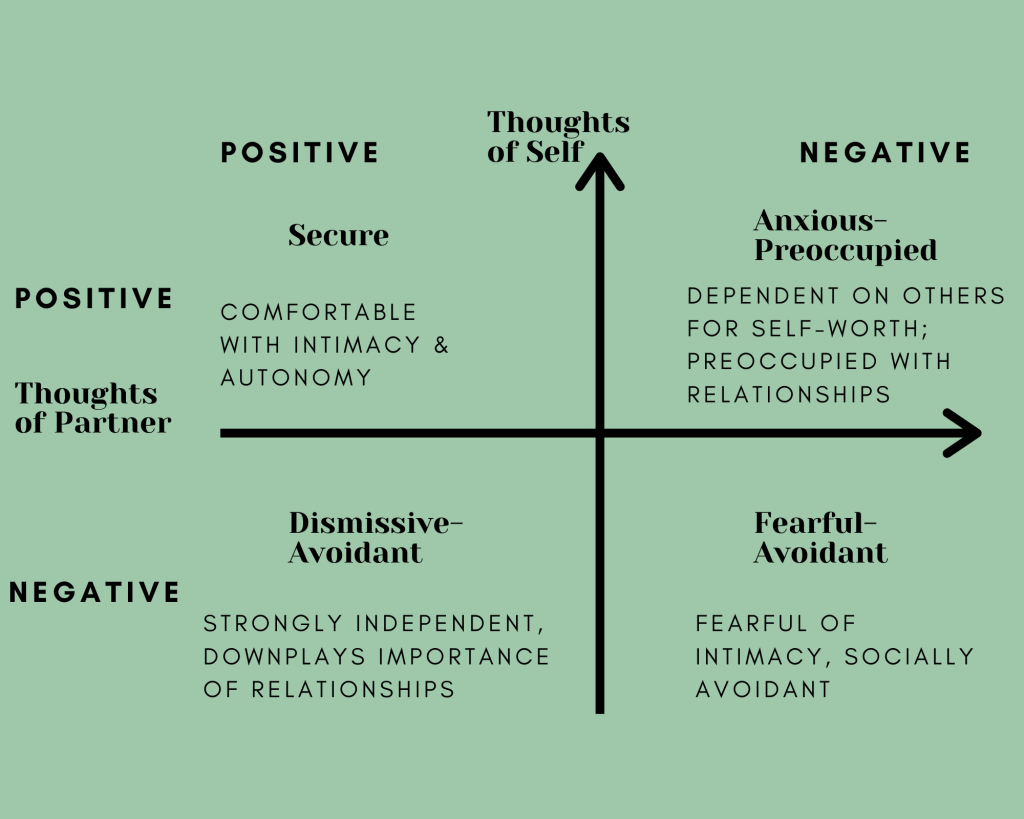
I love this quote because it shows us that we are not broken or “too much”, but rather that we need to deepen our understanding of ourselves, our needs, and how we relate to others. People that fall more on the avoidant side of the theory have completely different views on relationships and intimacy than those on the anxious side, and they have different needs too. If you resonate with this post, you may have more of an anxious attachment style like I have.

If you identify your attachment style, you will be able to learn about how that presents in you within your relationships. Having that awareness will enable you to communicate with your partner more effectively around how you feel and what you need. It also enables you to learn how you might interact with the other attachment styles, which is key if you are in relationship with someone that has a different style from you. You need to be able to understand how they view things and what they need as well.

So in summary, I don’t think anyone is “too much” of anything. Maybe you’re too much for some people, and that is okay. That says more about the other person than it does about you. It says that they are not willing or able to meet your needs, or that they have views and perspectives on relationships that conflict with yours.

That doesn’t mean there is something wrong with either person.

The more you work on yourself and build self awareness, the more easily you will be able to clearly understand and communicate your needs. Those meant for you will make an effort to understand and rise up to meet them. Otherwise, you can set them free with an understanding that it is not about you as a person. I’m not saying it will be easy or that it won’t hurt, because it probably will. It hurts a lot more, for longer, if you try to make it work with someone that has already told you or demonstrated that they will not or cannot meet your needs.

This inner work also enables you to better understand the needs of those closest to you so you can deepen those relationships. If you want others to meet your needs and be that secure base for you, you need to make sure you’re willing to do the same for them. It takes mutual effort and understanding to make any relationship work, and I hope you leave this post knowing that you are worthy of having that type of healthy partnership!

With love,

Jessica